
Building a Home Near Great Sacandaga Lake: What to Know Before You Break Ground
TLDR: Building near Great Sacandaga Lake means navigating Fulton and Saratoga County setback rules, seasonal water table shifts, and a shorter building season than you'd get further south. But with the right local contractor, most lakeside and near-lake builds run 8–12 months from permitting to move-in. Steel Pines can help connect you with a trusted local land surveyor, then we’ll handle permitting and the full build — from sitework through finish work, whether we self-perform or bring in the right subs — so you're not learning these rules the hard way.
Updated: July 14, 2026
Table of Contents
Why Building Near the Sacandaga Is Different
Step 1: Understand Your Land Before You Buy
Step 2: Permitting and Setbacks Around the Reservoir
Step 3: Designing for the Site — Slope, Soil, and Sun
Step 4: Building Through an Adirondack Foothills Season
A Realtor's Perspective: Buying Land Near the Sacandaga
From the Job Site: What We've Learned Building Here
FAQ
Related Reading
Ready to Start?
Why Building Near the Sacandaga Is Different
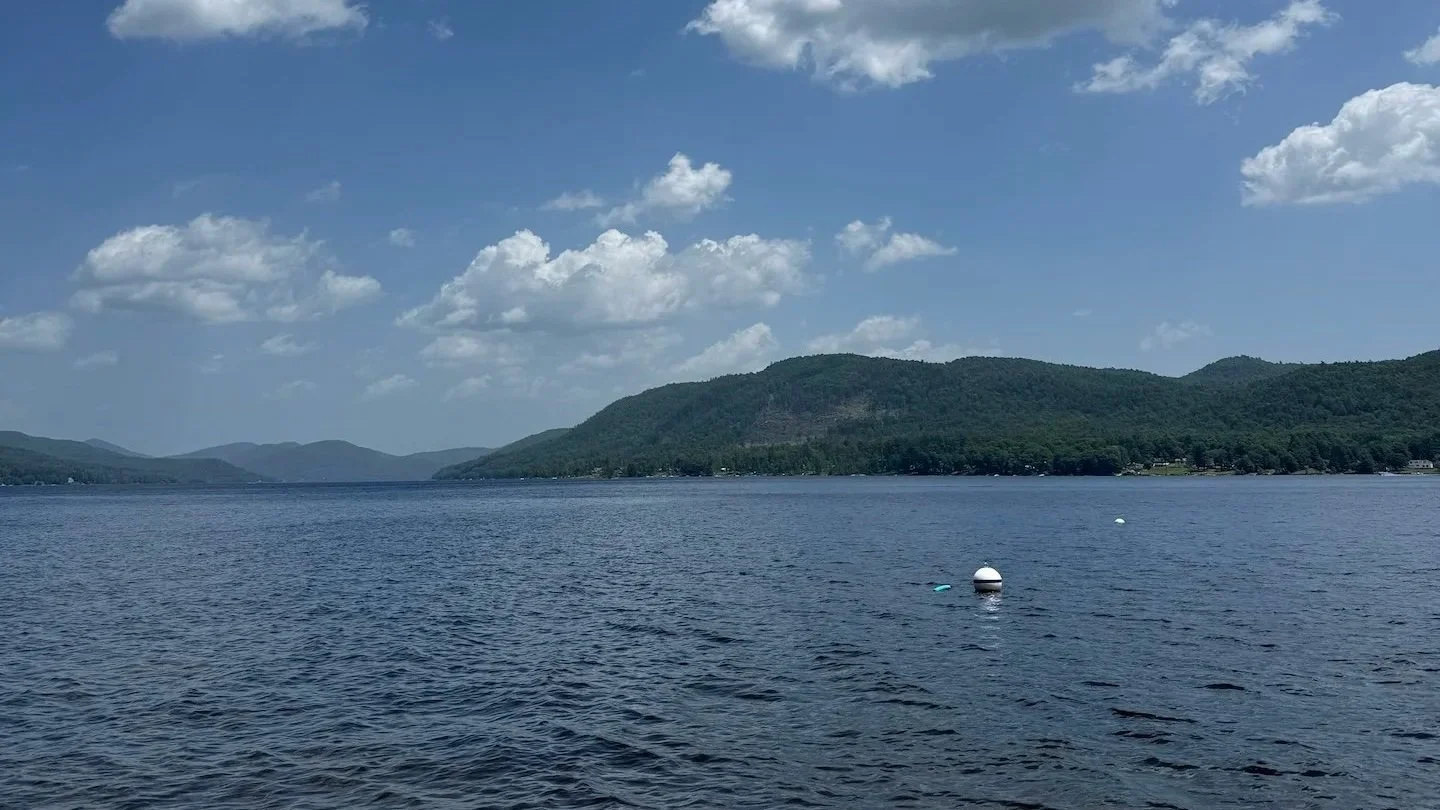
Great Sacandaga Lake isn't a natural lake - it's a reservoir, created and managed by the Hudson River-Black River Regulating District ground rules for anyone building nearby. Water levels are drawn down every winter and refilled each spring, which affects everything from shoreline stability to how close you can build to the high-water mark. Add in the rolling terrain of the southern Adirondack foothills, and a lake-area build asks more of your site work than a typical flat-lot project in the Capital Region.
None of that should scare you off. It just means your contractor needs to know the area, not just the trade.
Step 1: Understand Your Land Before You Buy (or Before You Design)
If you already own the land, start here anyway. It changes your design before it changes your permit application.
What to check first:
Flood zone status. Flood maps around the reservoir shift shoreline to shoreline. A lot 200 feet from the water can sit entirely outside a flood zone in the fall and be at a completely different point in the spring. While a lot right on a cove can require elevated construction. Hudson River-Black River Regulating District will identify the high-water mark on your property.
Soil and percolation. Much of the land around the Sacandaga is sand and glacial till, which can mean shallow soil, ledge rock close to the surface (up a steep hillside), or drainage that doesn't behave like it does in flatter parts of Fulton, Saratoga, or Hamilton County. A perc test before you finalize a septic design is required by code.
Access and grade. Rural lake-adjacent parcels often come with long driveways, steep grades, or seasonal road maintenance. That affects both your budget and your equipment access during the build.
Deed restrictions and easements. Older camp lots and subdivided shoreline parcels sometimes carry easements for shared docks, rights-of-way, or utility access that aren't obvious from a listing.
Walk the land with a professional before you close on it. It's a lot cheaper to find out about ledge rock or an easement in week one than in month four.
Step 2: Permitting and Setbacks Around the Reservoir
Building near the Sacandaga typically involves more than one layer of approval:
Local town or county building permits (Edinburg, Day, Hadley, Northampton, and neighboring towns each administer their own process)
Setback requirements from the reservoir's high-water mark, which are stricter than standard wetland setbacks in a lot of cases
Septic system approval especially important given the soil conditions above
Regulating District coordination, if your project touches the shoreline itself (docks, retaining walls, shoreline stabilization)
Timelines vary town to town, but budgeting 6–10 weeks for permitting before you break ground is realistic for most residential lake-area projects. Projects that touch the shoreline directly can take longer.
Step 3: Designing for the Site — Slope, Soil, and Sun
Lake-area lots reward a design that works with the terrain instead of fighting it:
Walkout basements make sense on a lot of Sacandaga-area slopes and can add usable square footage without extra roof line.
Orientation toward the water matters for view and light, but we also design for prevailing wind off the lake, which can be a real factor in January.
Foundation drainage gets extra attention here. Between the slope and the seasonal water table swings from reservoir drawdown, a foundation system that handles water well isn't optional.
Exterior material choice should account for lake-effect moisture and UV exposure on south-facing elevations. This is a conversation worth having at the design stage.
Step 4: Building Through an Adirondack Foothills Season
The building season around Edinburg and the Sacandaga runs shorter than it does downstate. Frost can linger into April, and you want your foundation and dry-in complete before the first hard freeze in late fall. That means:
Sequencing site work and foundation for early spring or summer starts, so framing and roofing happen in warm months
Ordering long-lead materials early — supply timelines for windows, trusses, and certain siding products can run 6–12 weeks, and that's before you factor in a rural delivery address
Planning around mud season, which affects both site access and concrete pours
A contractor building your first Sacandaga-area project on a downstate timeline is setting you up for delays. A contractor who's built here before builds the calendar around the actual season.
A Realtor's Perspective: Buying Land Near the Sacandaga
"I always tell people to do your research! Know your setbacks, speak with the building code enforcer, and even better, set up a quick meeting with a local contractor on what to expect during the build process. Also be mindful of timing when you have that meeting — prices, and sometimes codes, change frequently."
— Courtney St. Onge, Licensed Real Estate Salesperson with Howard Hanna Real Estate Services
From the Job Site: What We've Learned Building Here
“One of our customers came to us with stamped, engineered plans for their custom home on Great Sacandaga Lake — including a full 9-foot basement, all designed and ready to build. Before we broke ground, we walked the lake view property with the sitework contractor to lay out the house and dig preliminary holes to check soil depth for the foundation.
We hit ledge rock at two feet.
Bringing in enough fill to still build that full basement as designed would have been astronomical — the kind of cost that changes a project's entire budget overnight. That hidden rock, sitting two feet under a lot that looked perfectly buildable from the surface, turned into a full redesign: a walkout basement instead of the original plan.
It's exactly the kind of thing we mean when we say know your soil before you finalize your design. A parcel can look ready to build on and still be hiding something that changes everything — which is why we suggest clients do a survey and soil test before plans get locked in.”
— Mark Burroughs, Owner, Steel Pines
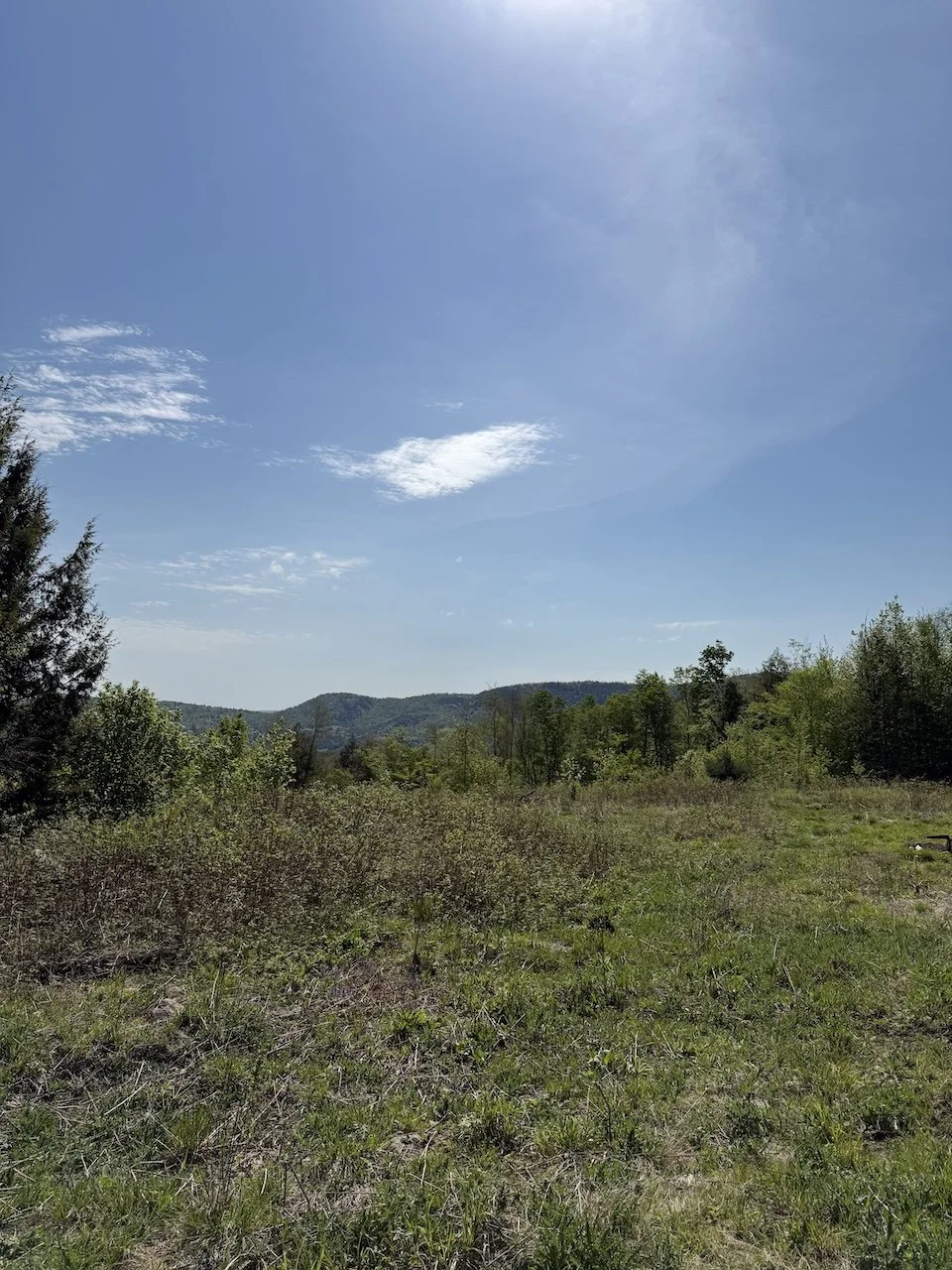
The site before layout — a cleared meadow with a distant ridge view, one of many parcels near the Sacandaga where what's underground doesn't match what's on the surface.
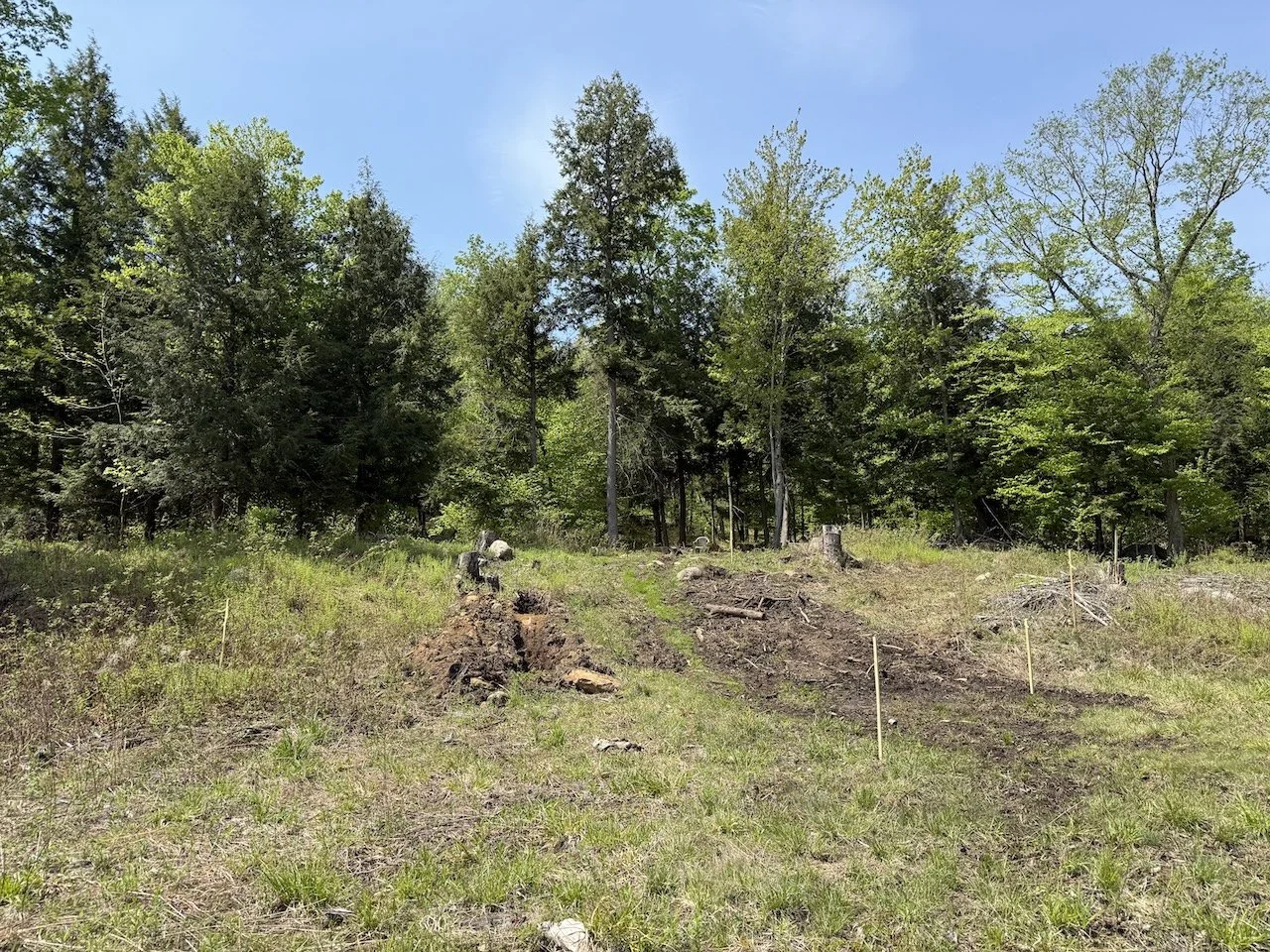
Laying out the house with the sitework contractor and digging preliminary holes to check soil depth — this is the stage where we hit ledge rock at two feet.
FAQ
How close to Great Sacandaga Lake can I build? Setback distances depend on your specific parcel, its zoning district, and its distance from the reservoir's high-water mark. Setbacks near the Sacandaga are often stricter than standard wetland buffers elsewhere in New York. Check with your town building department and the Regulating District before finalizing a site plan.
Do I need a special permit to build near the reservoir? You'll need standard town/county building and septic permits at minimum. Projects involving the shoreline itself — docks, retaining walls, shoreline stabilization — typically require additional coordination with the Hudson River-Black River Regulating District.
How long does it take to build a home near the Sacandaga? Most residential projects run 8–12 months from permitting through move-in, though this varies with size, site complexity, and the season you start in. Starting site work and foundation work in early spring or summer keeps you ahead of the shorter regional building season.
Is the soil around Great Sacandaga Lake good for building? It varies significantly by parcel. Much of the area sits on sand and glacial till, which can mean shallow soil depth. Or further up a hillside you can hit ledge rock close to the surface. A perc test and soil evaluation before finalizing your design is required.
Can I build a walkout basement on a sloped lake lot? Often, yes — and it's frequently the best use of a sloped Sacandaga-area site, adding usable living space without changing your roofline. Whether it works for your specific lot depends on grade, soil, and water table.
Does Steel Pines build year-round near the lake? We plan around the regional building season rather than fighting it. Site work and foundations are best started in early spring or summer; framing and dry-in through the warmer months keep interior finishing on track through fall and winter.
About the Author
Darcie Burroughs is a co-owner at Steel Pines, LLC., a general contracting and sawmill business based in Edinburg, NY, serving the Great Sacandaga Lake region and the southern Adirondacks. Steel Pines combines hands-on construction experience with local sawmill capability, giving clients control over materials from timber to finished build.
Thinking About Building Near the Lake?
Every lakeside lot is different — the soil, the slope, the setbacks, all of it. Before you finalize plans or make an offer, talk to a contractor who already knows this stretch of Fulton and Saratoga County.