
From Forest to Home: How Steel Pines Mills Local Timber
Most people meet a tree twice: once when it's standing, and once when it's a finished mantle over their fireplace. Everything in between — the part where it actually becomes wood you'd want in your home — happens without an audience. So I figured it was time somebody gave that middle part its due.
Here's what happens at Steel Pines when a tree becomes a piece of living art (or a structural necessity) in your home.
Stage 1: Standing to Logging
Every board, beam, and live edge slab we've ever milled started as a tree growing somewhere (hopefully) within a short drive from our shop — often on land we know, sometimes on land we've walked a hundred times. We work with local logging companies to source these beauties. Before anything gets cut, there's a decision being made about which trees come down and which ones stay standing. This isn't a clear-cut operation. Foresters are thinking about the health of the forest as much as the health of the log, because a logging operation that doesn't respect the woods it draws from doesn't get to keep drawing from it. Once a tree is selected, it comes down and gets bucked into logs — cut to length, limbs removed, ready to travel.
A logging operation landing site in the Adirondacks with stacked logs.
Stage 2: The Landing
The logs get hauled to our landing — think of it as the waiting room before the mill. This is where a log sits for a bit before its turn, sorted by species, size, and what we already have an idea it might become. Some logs are clearly destined for framing lumber. Others — the ones with a little character, a burl, an unusual grain, a wide enough trunk — get flagged early as live edge candidates.
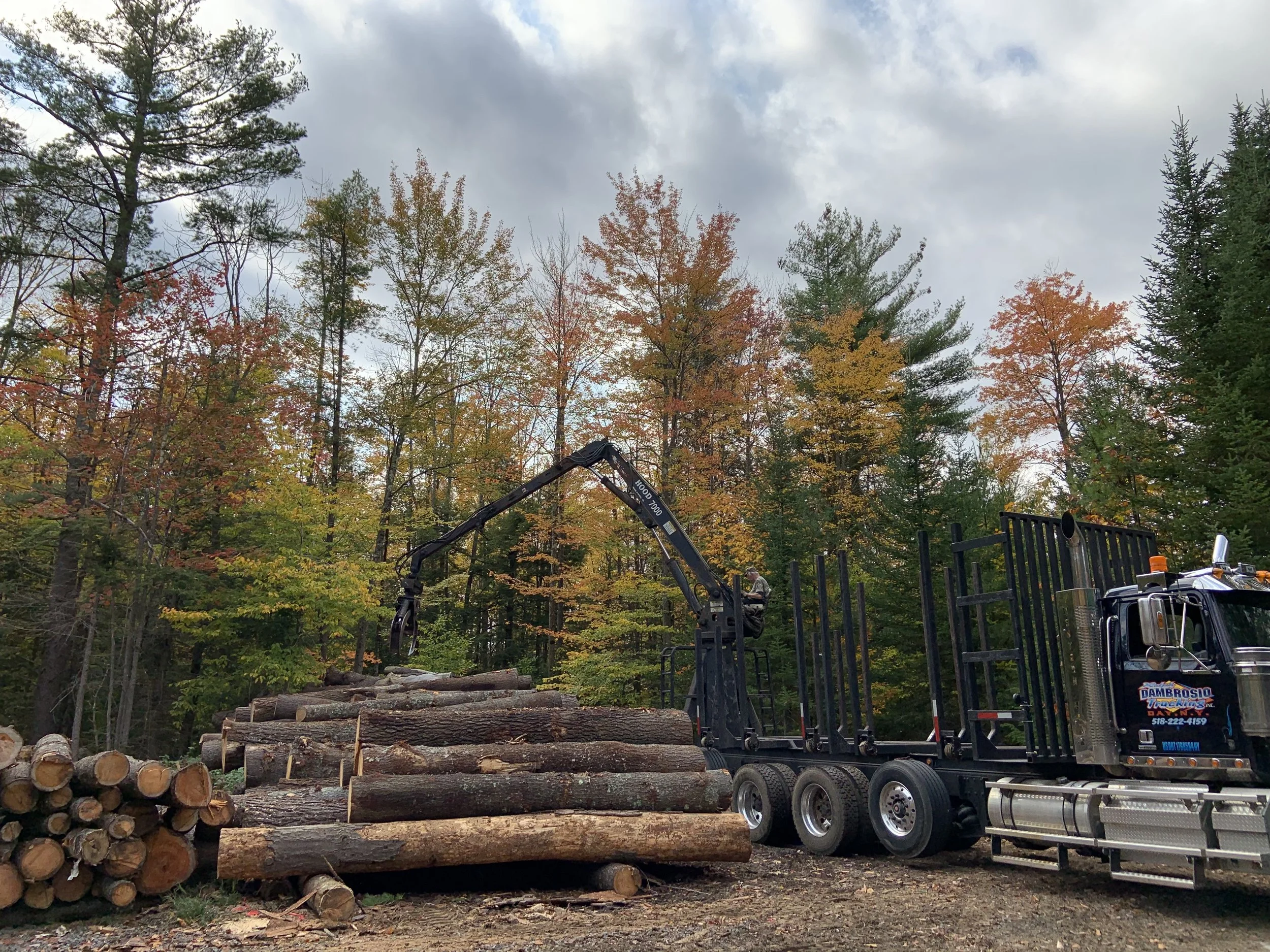
A local logger dropping off a load of eastern white pine logs for future milling.
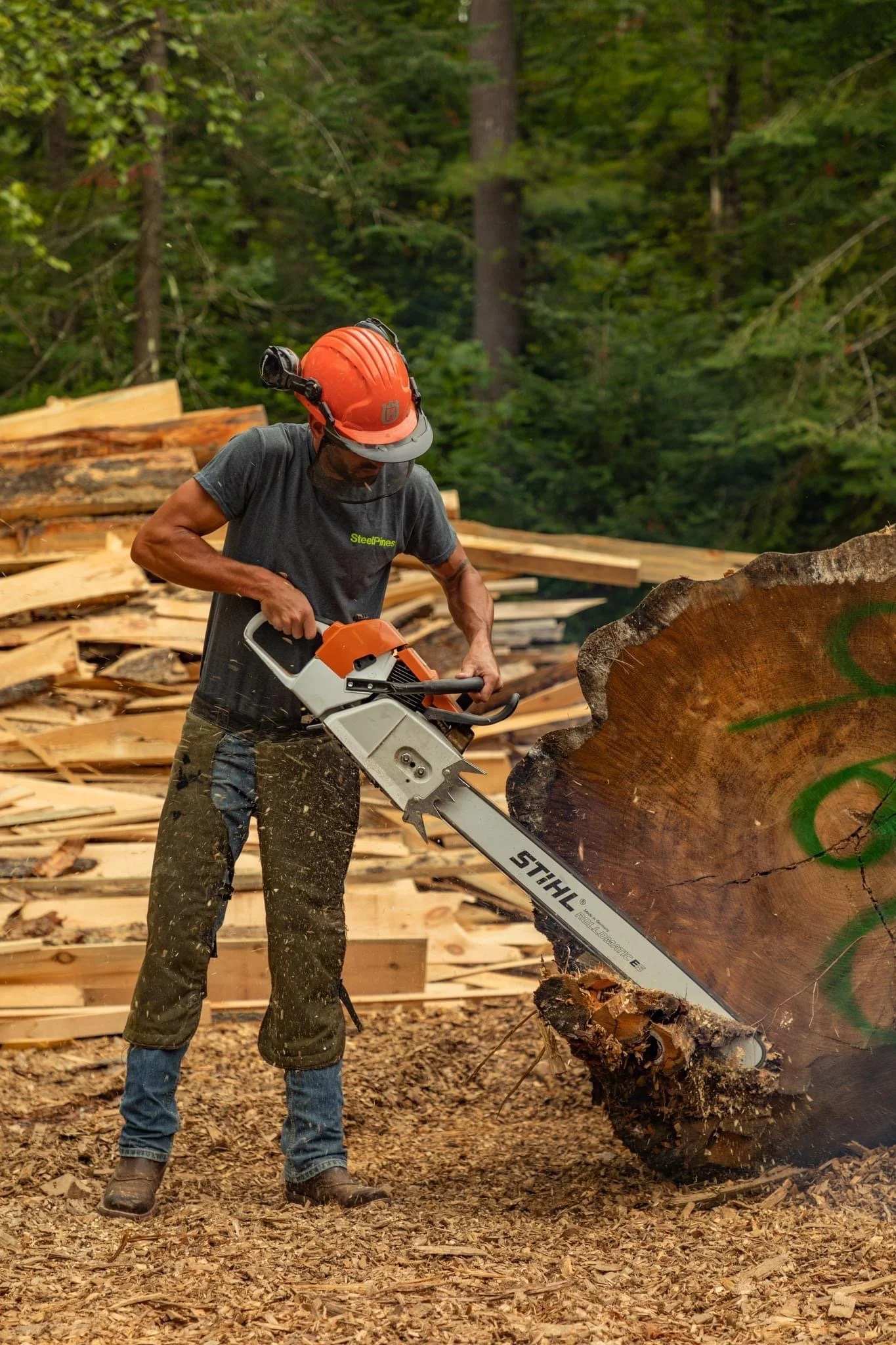
Chainsawing rough edges off a massive log.
Stage 3: The Sawmill
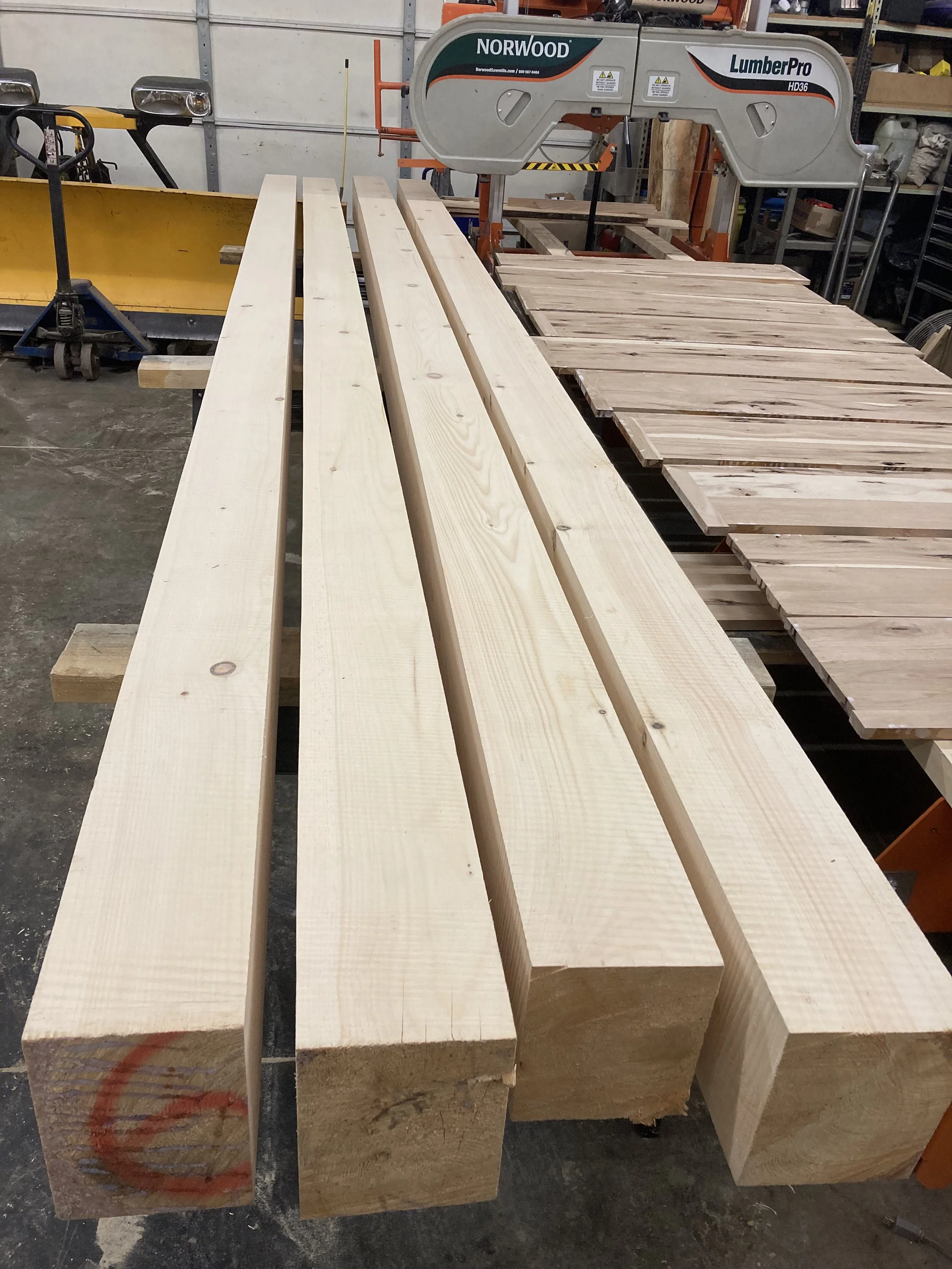
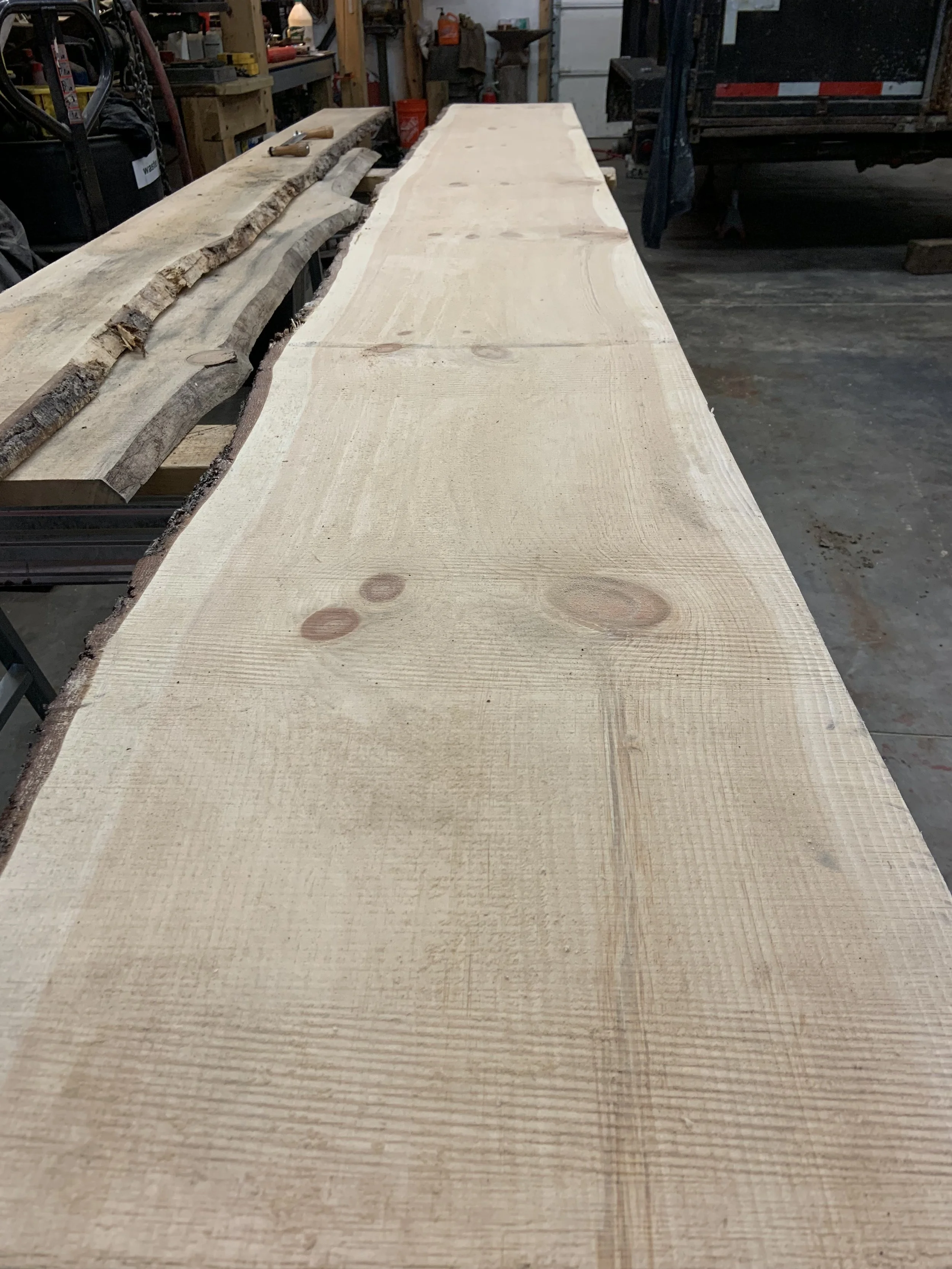
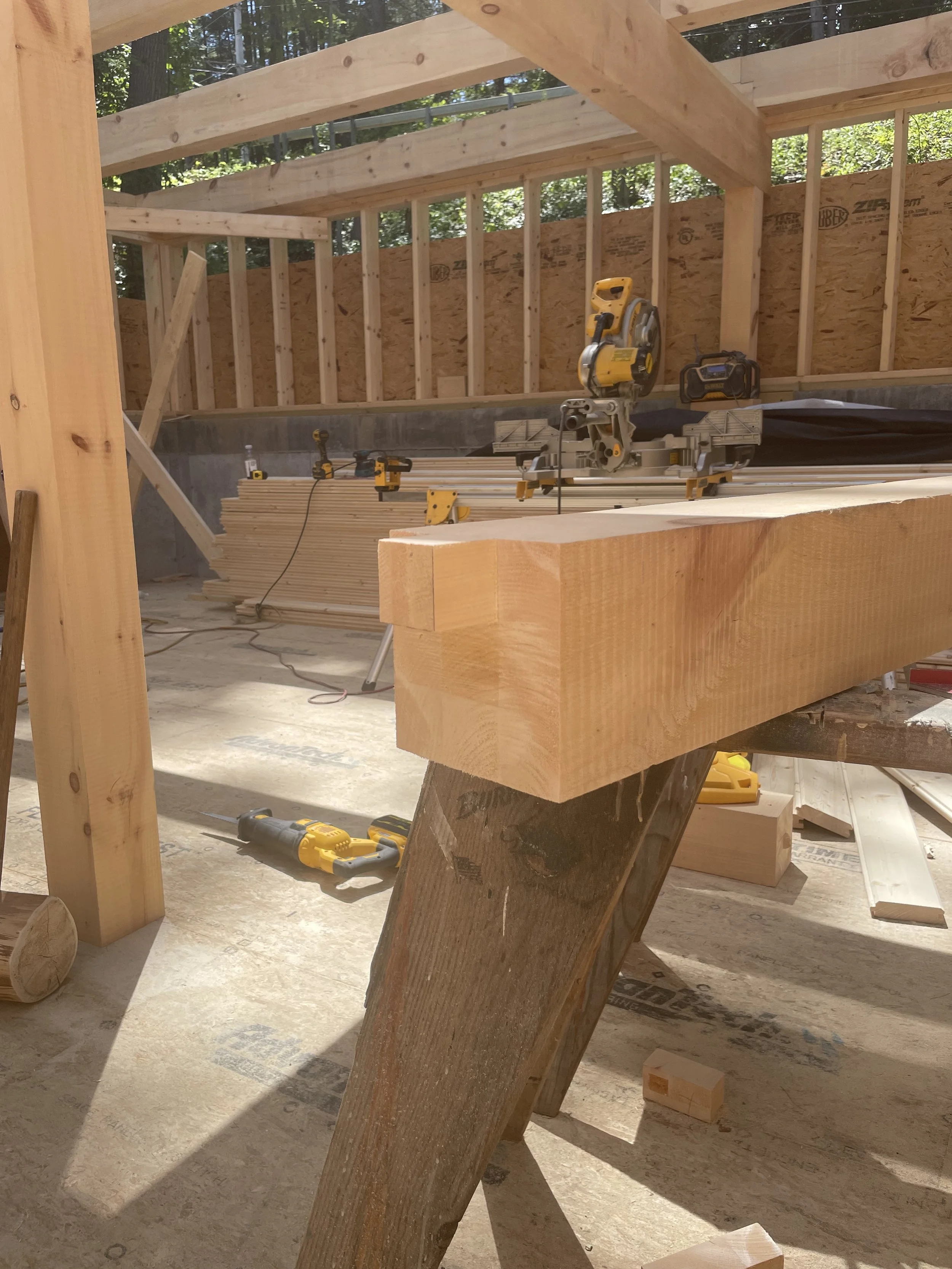
This is where the tree stops being a log and starts being lumber. We run it through the mill and cut it into boards, slabs, or beams, depending on what it's meant to become. A live edge slab gets cut to preserve its natural, uneven edge — the whole point is that it still looks like it came from a tree, bark line and all. A structural beam gets cut for strength and dimension. Same log, completely different fate, depending on the cut.
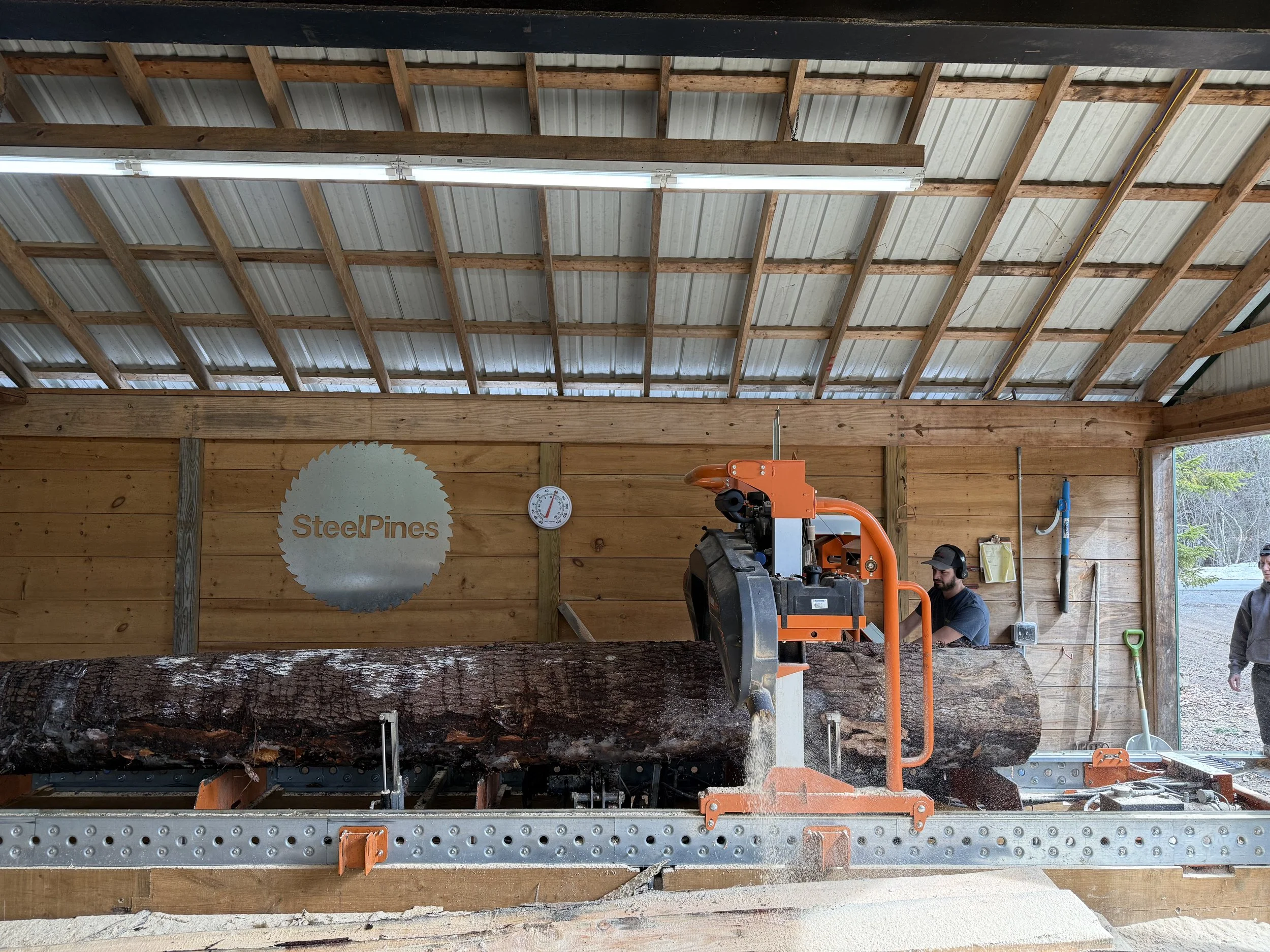
Stage 4: Drying
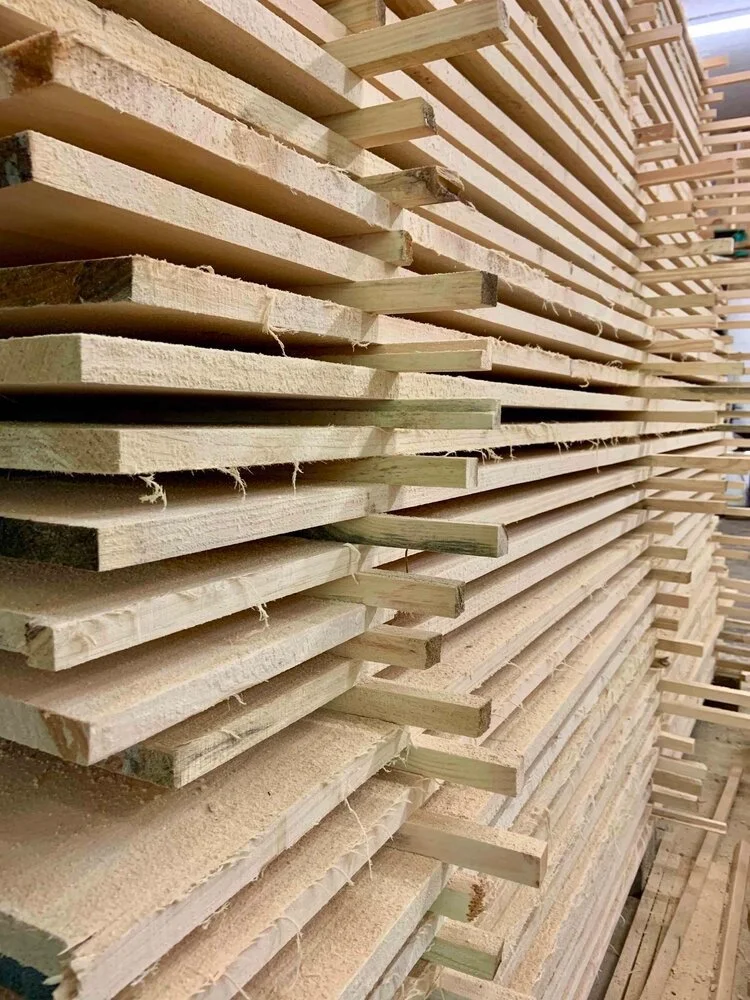
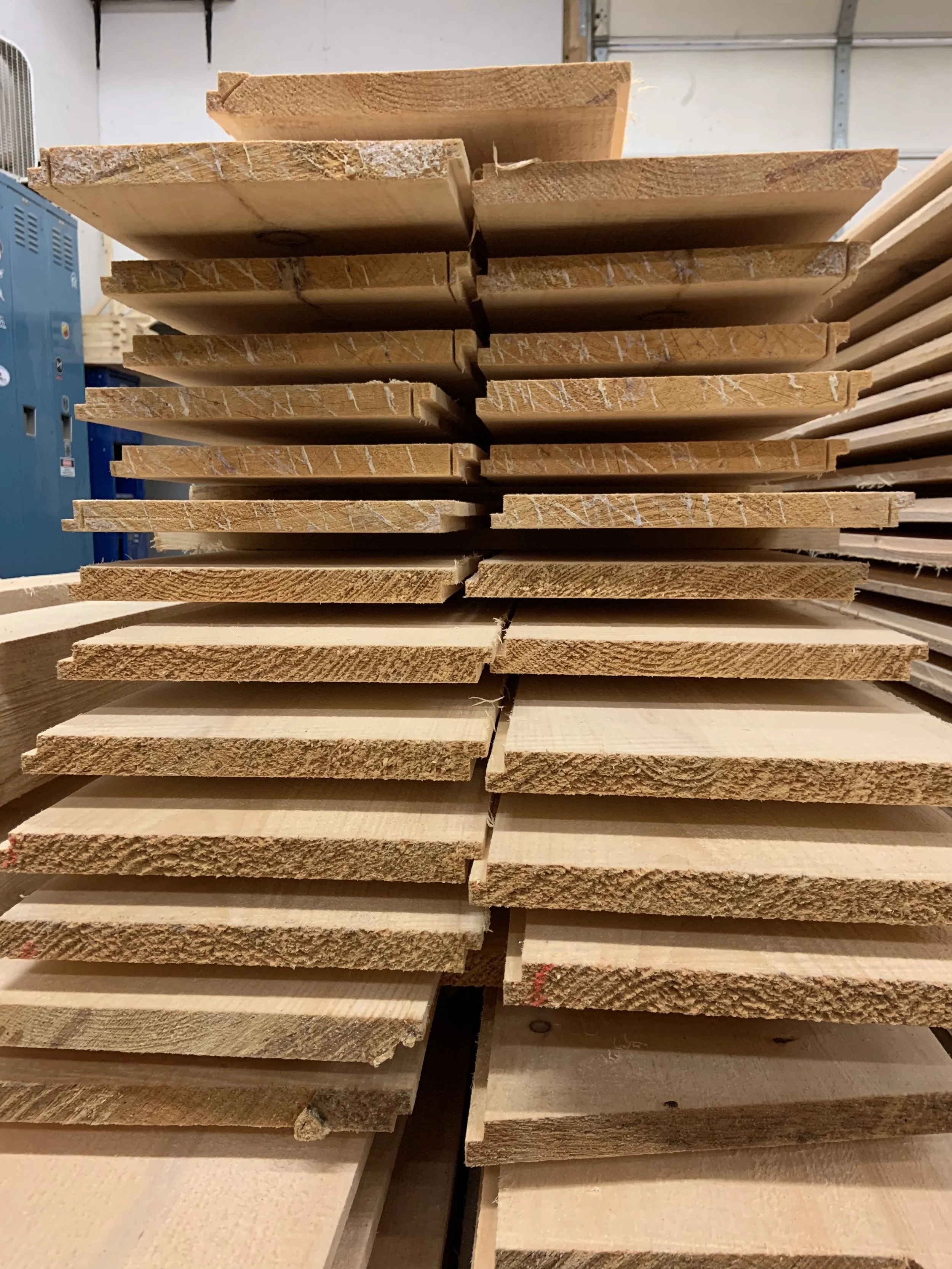
Freshly cut wood is nowhere near ready to become anything yet — it's full of moisture and needs time to stabilize before it can be trusted in a home. This is the part with the least amount of visible action and the most amount of patience. Wood dries slowly, on its own schedule, not ours. Rush this step and you'll end up with cracking, warping, or a beam that shifts on you a year after installation. We'd rather wait it out.
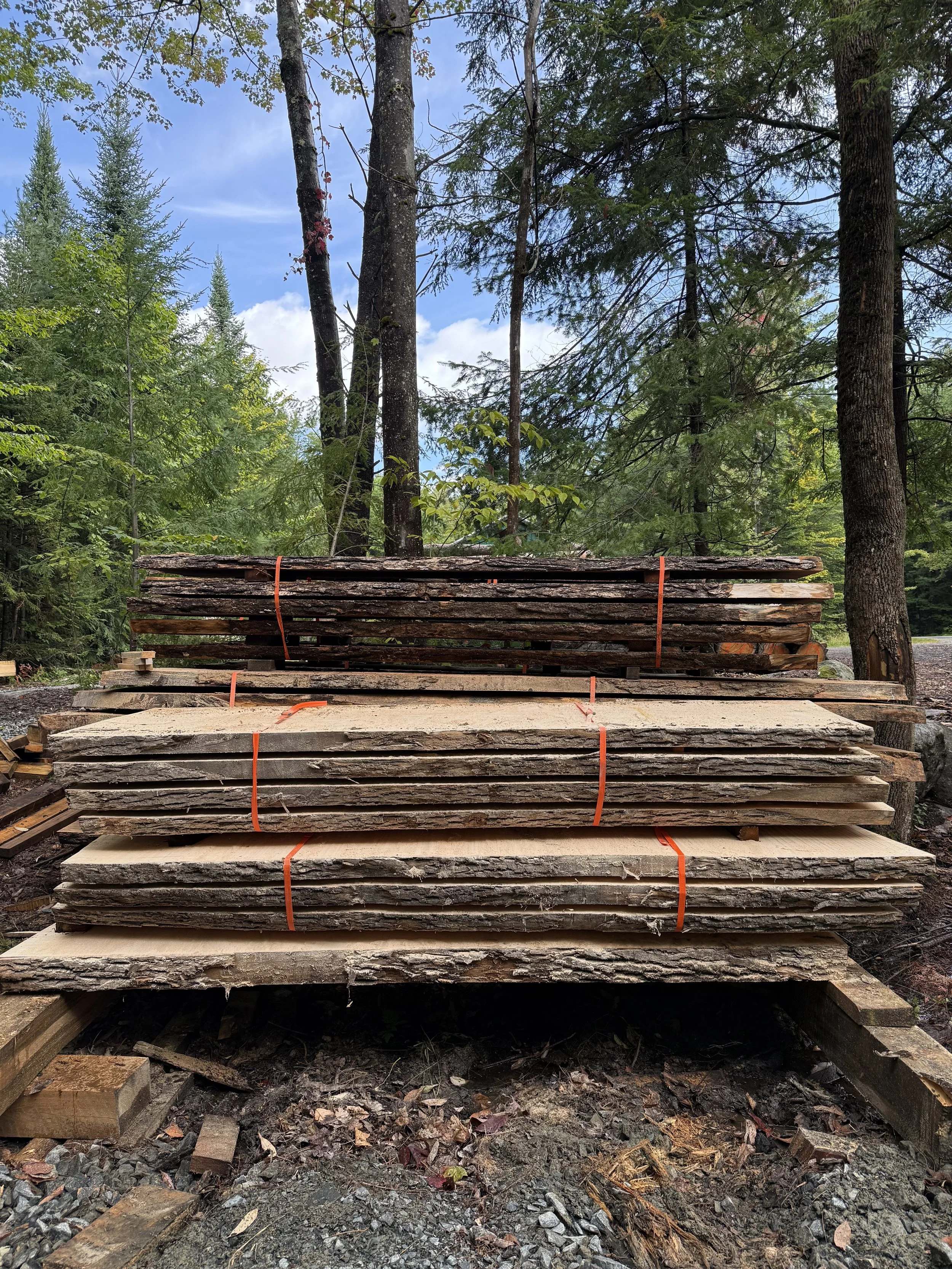
Stage 5: Your Home
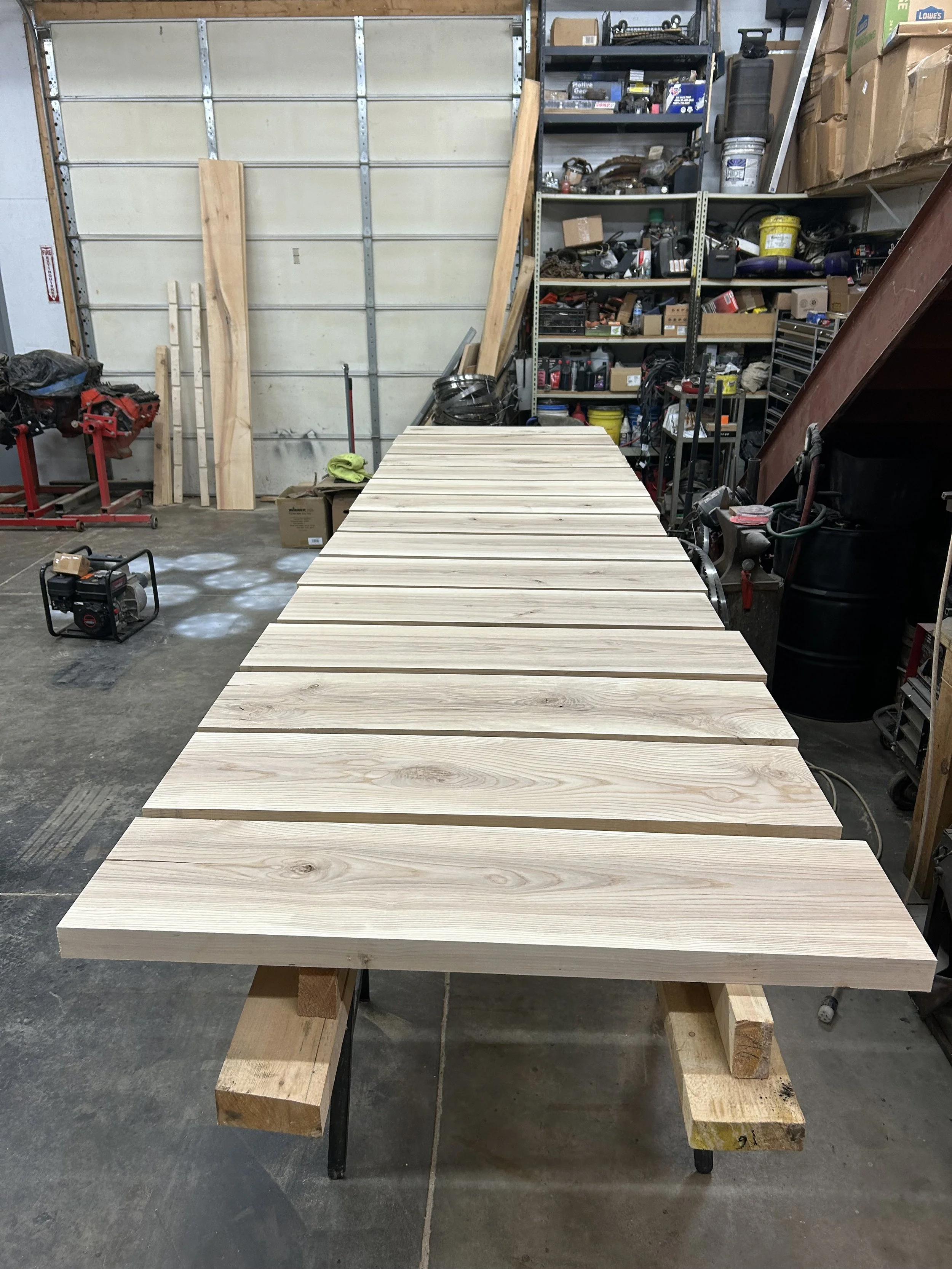
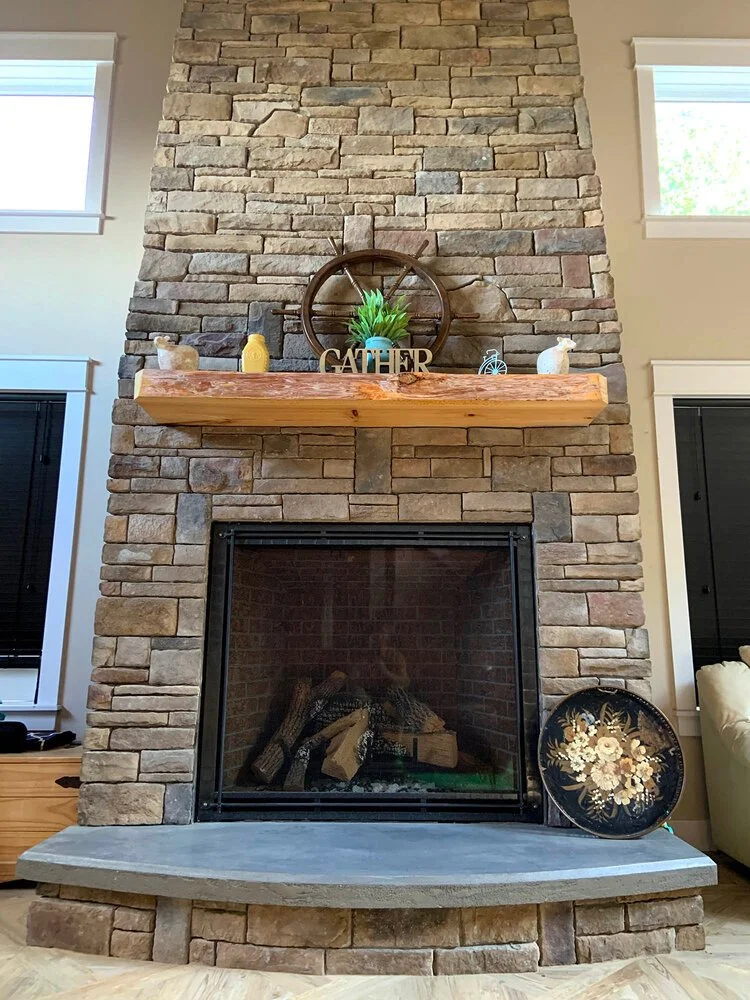
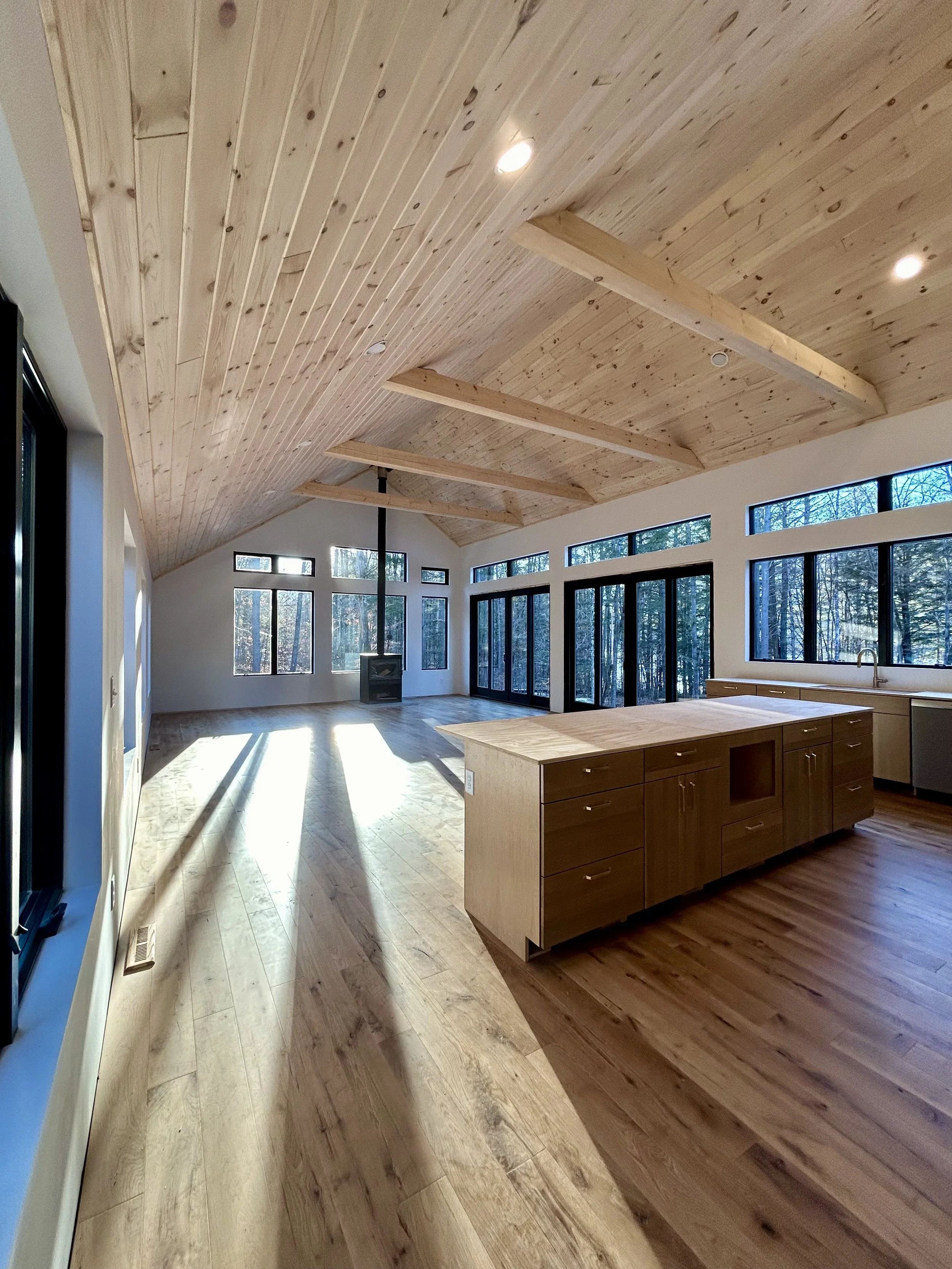
After all of that — the standing, the cutting, the landing, the milling, the drying — the wood finally becomes something you actually see: a live edge mantle over a fireplace, an exposed beam in a great room, a slab countertop with a story nobody else's kitchen has. It's easy to look at a finished mantle and think of it as a design choice. It's actually the last stop on a much longer trip.
That's the part I like most about milling our own wood, honestly. When a client picks a slab for their mantle, they're not picking a material out of a catalog. They're picking a specific tree that grew near here, came down for a reason, waited its turn, got cut a certain way, and dried patiently until it was ready to be trusted in someone's home. It's got a whole life behind it before it ever becomes furniture.
Next time you run your hand along a live edge slab or lean on an exposed beam, you're touching the end of a process that probably started years before you ever walked into the room.
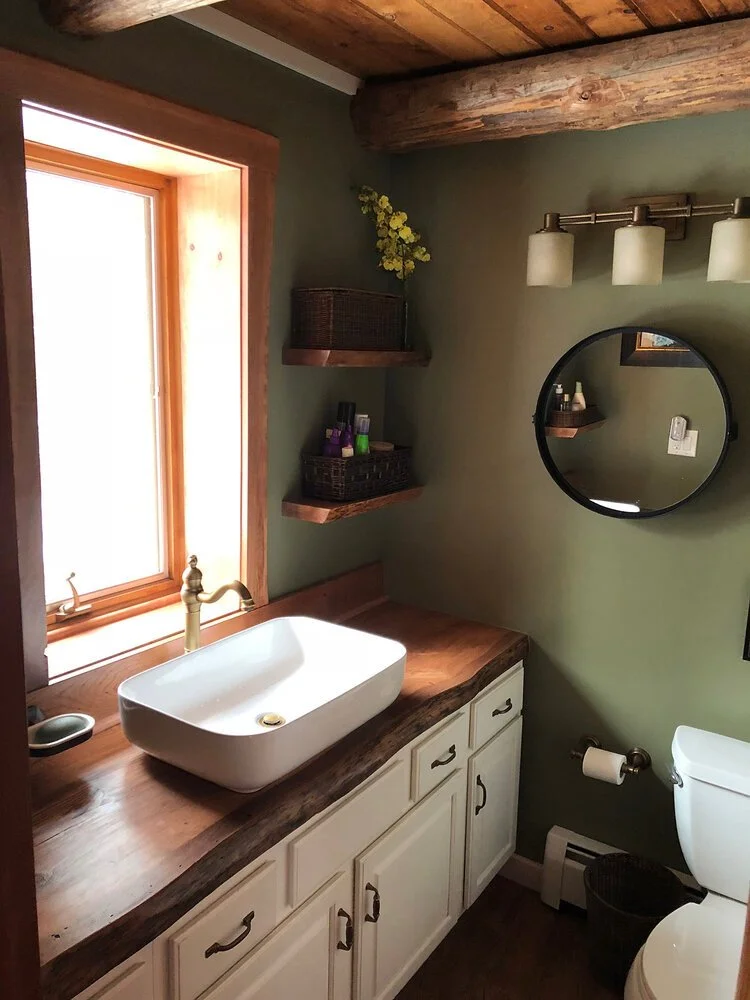
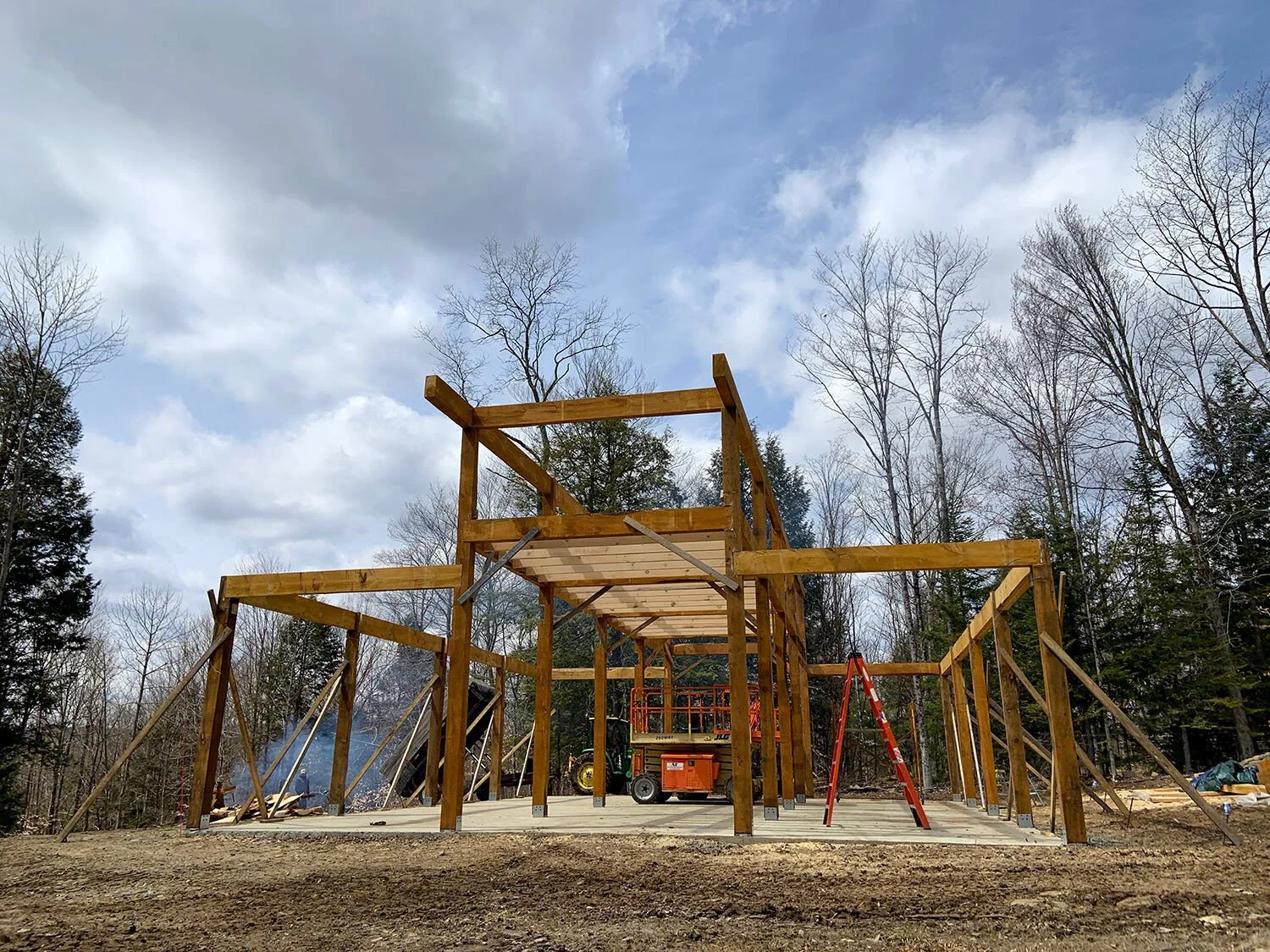
Steel Pines mills its own lumber from logs sourced locally in the southern Adirondacks, so every live edge slab, beam, and board we use has a story that starts long before it reaches your home.
Curious what your own live edge slab or beam could look like? Visit our sawmill page or reach out — we'd love to show you what's currently drying and waiting for the right home.