
Renovation vs. New Build: What to Do With an Old Camp or Cabin on Your Lake Lot
JULY 28, 2026 — Steel Pines
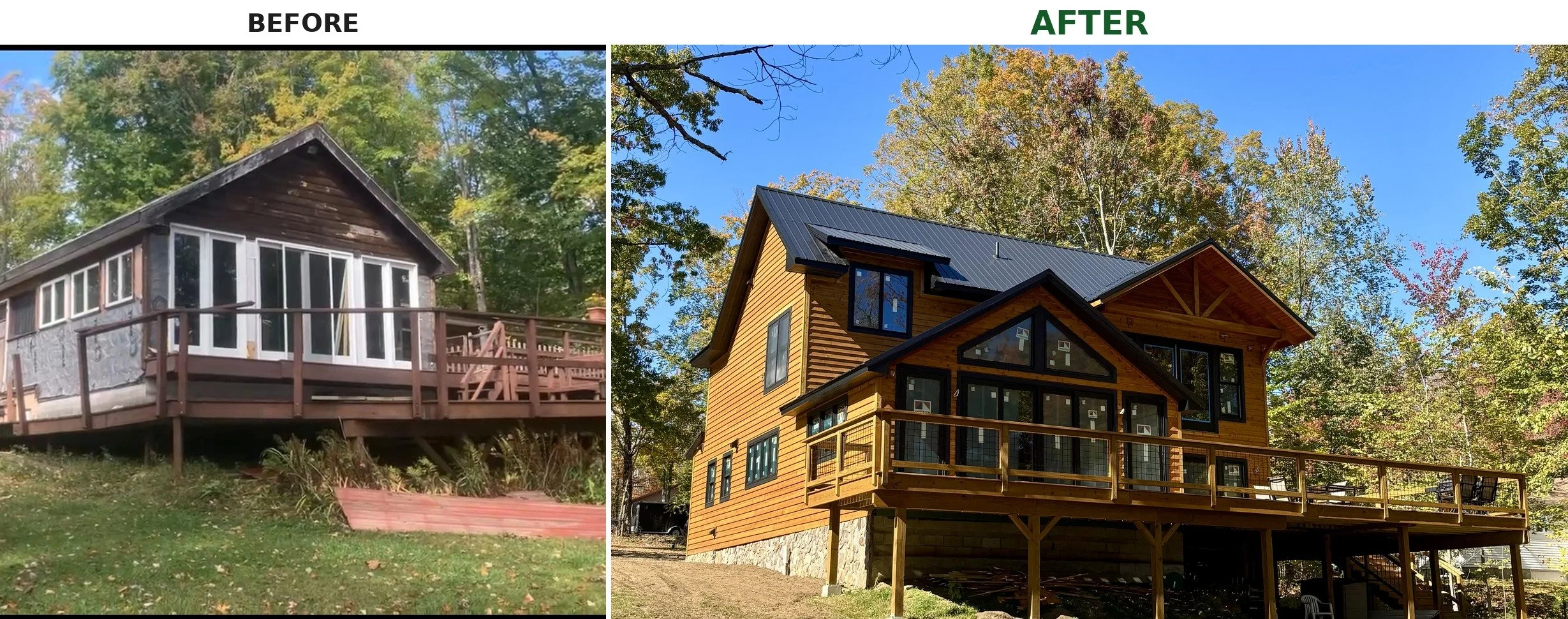
If you've bought (or inherited) a lot near Great Sacandaga Lake with an old camp or cabin already on it, the renovation-vs-teardown decision usually comes down to three things: the condition of the foundation and framing, whether the existing structure sits inside current shoreline setbacks, and what you actually want the finished home to be. A camp in decent structural shape on a grandfathered, close-to-water footprint is often worth renovating around — because a new build on that same lot might legally have to sit much farther back. A camp with a failing foundation, undersized septic, or knob-and-tube wiring is usually cheaper, in the long run, to remove and rebuild than to save. The right call is site-specific, and it's one we'd rather walk through with you before you sign a renovation contract or pull a demo permit.
Table of Contents
Why This Decision Comes Up So Often Here
Start With an Honest Structural Assessment
The Setback Question Nobody Thinks to Ask
Septic, Well, and Electrical: The Hidden Cost Drivers
When Renovation Is the Right Call
When a Teardown and Rebuild Makes More Sense
The Renovation Wildcard: What You Can't See Until Walls Are Open
Cost and Timeline: How the Two Compare
FAQ
Related Reading
Ready to Start?
Why This Decision Comes Up So Often Here
Great Sacandaga Lake has a lot of camps that were built decades ago — small footprints, low ceilings, single-pane windows, and a foundation that was never meant to carry a year-round, four-season home. A lot of our clients come to us with exactly this: they bought the lot for the view and the water access, and the "house" that comes with it needs a decision made before anything else can move forward.
It's rarely a simple yes-or-no. The camp itself might be in rough shape, but its location can be the most valuable thing about it — and that's where this decision gets more complicated than most people expect.
Start With an Honest Structural Assessment
Before anything else, we want eyes on:
Foundation type and condition. Many older camps sit on piers, block, or a shallow crawlspace foundation never designed for insulation or a full winter load. Cracking, heaving, or rot at the sill plate often means the foundation isn't worth building on top of.
Framing and roof structure. Older camps were often built for seasonal use only — undersized rafters, no vapor barrier, minimal insulation. Converting to year-round use can mean gutting to the studs anyway.
Moisture and pest damage. Camps closer to the shoreline see more humidity, more freeze-thaw cycling, and more carpenter ant and rodent activity than homes set back from the water.
If the foundation and main structure are sound, renovation stays on the table. If either one is compromised, you're usually looking at rebuilding from the ground up regardless of what else makes the decision for you.
The Setback Question Nobody Thinks to Ask
This is the piece that changes the math on more lake projects than anything else, and it's easy to miss: an old camp is often "grandfathered" into a footprint that current shoreline setback rules would no longer allow.
Setback requirements from the reservoir's high-water mark — and from wetlands, side yards, and roads — have generally gotten stricter over the decades. A camp built in the 1960s or 70s may sit well inside today's minimum distance from the water. As long as that structure exists and you're renovating rather than starting fresh, many towns and the Hudson River-Black River Regulating District will let you keep that nonconforming footprint, sometimes with limits on how much you can expand it.
Tear the camp down completely, though, and you may lose that grandfathered status. A full teardown can trigger a requirement to meet current setbacks on rebuild — which, on a tight or narrow lake lot, can mean a meaningfully smaller building envelope, a different orientation, or a footprint pushed well back from where the original camp sat.
This is exactly the kind of thing to confirm with your town's code enforcement office and, if the Adirondack Park Agency has jurisdiction on your parcel, with the APA directly — before you decide to demo anything. It can be the single biggest factor in the renovate-or-rebuild decision, bigger even than the condition of the structure itself.
Septic, Well, and Electrical: The Hidden Cost Drivers
Even when the structure itself is renovation-worthy, the systems underneath it often aren't:
Septic sizing. Camps built for seasonal, weekend use were frequently designed around a much smaller septic system than a full-time, multi-bedroom home needs. Converting to year-round use can require a septic upgrade or full replacement regardless of what you do with the structure above it.
Well capacity. The same logic applies to well yield — a well that was fine for occasional weekend use may not keep up with daily, year-round household demand.
Electrical service. Older camps commonly have undersized electrical panels, aluminum wiring, or no grounding at all. Bringing this up to current code is standard on almost every camp renovation we take on.
None of these are visible from a walkthrough. They're worth a professional assessment before you commit to a renovation budget.
When Renovation Is the Right Call
Renovation tends to make the most sense when:
The foundation and framing are structurally sound
The camp sits inside a grandfathered footprint you want to preserve, especially on a tight or close-to-water lot
You're comfortable working within the existing footprint's general layout and orientation
Septic and well systems can be upgraded rather than fully replaced
When a Teardown and Rebuild Makes More Sense
A full rebuild tends to make more sense when:
The foundation is failing, undersized, or not built for a four-season home
Current setbacks wouldn't meaningfully shrink your build envelope, so there's little grandfathering advantage to protect
You want a layout, square footage, or orientation the existing footprint can't accommodate
Septic and well systems need full replacement anyway, at which point rebuilding the structure alongside them is often more efficient than working around it
The Renovation Wildcard: What You Can't See Until Walls Are Open
Even with a thorough walkthrough and a careful structural assessment up front, renovation carries a kind of risk that a new build doesn't: you can't fully see what you're working with until the walls, floors, and ceilings come open. On an old camp, that's often where the real story is.
Some of the most common surprises we run into once demo starts:
Rot and water damage hidden behind finished walls, especially around old window openings, roof valleys, or anywhere the original construction wasn't flashed or sealed the way it would be today.
Undersized or improperly installed framing from an era with looser (or no) code enforcement — rafters or joists that were never sized for the loads a four-season home needs.
Old wiring left in place rather than removed, sometimes still live, tucked behind newer electrical work from a previous update.
Subfloor damage under existing flooring, particularly near bathrooms, kitchens, or exterior doors, where slow leaks can go unnoticed for years.
No vapor barrier or insulation, or insulation that's degraded, settled, or holding moisture inside the wall cavity.
Pest damage from carpenter ants or rodents, common in camps that sat closed up for long stretches between uses.
None of this shows up on a pre-renovation walkthrough, no matter how experienced the eye doing the looking. It only shows up once the drywall, siding, or flooring actually comes off — which is usually a few weeks into the project, not before it starts.
This is exactly why we build contingency into a renovation budget and timeline from the outset, rather than treating it as an optional buffer. A camp renovation that looks straightforward on paper can turn into a scope change once we're a few days into demo, and that's not a sign something went wrong — it's a normal part of working with an existing structure. The clients who go into a camp renovation understanding that going in, rather than being blindsided by it mid-project, are the ones who handle it best.
Cost and Timeline: How the Two Compare
Renovation is not automatically the cheaper path — it depends heavily on how much of the existing structure can actually be reused. A camp that needs new septic, new electrical, a new foundation, and all-new framing is, in effect, a new build wearing an old roofline, often at a similar cost and timeline as starting fresh, but with the advantage of keeping a grandfathered footprint.
A true teardown and rebuild gives you a clean slate to design around your site, but you'll want to budget for demolition, potential fill or grading work, and full compliance with current setback and permitting rules from day one.
The only way to know which is actually cheaper on your specific lot is a site walk and a real assessment of the structure, systems, and applicable setbacks — not a general rule of thumb.
FAQ
Can I lose my grandfathered setback if I renovate too much? It depends on your town and, if applicable, the Adirondack Park Agency's rules — but generally, extensive expansion or a full teardown can trigger a requirement to meet current setbacks. Confirm the specifics with your local code enforcement office before starting demo or major renovation work.
Is it cheaper to renovate an old camp than to build new? Not always. If the foundation, framing, septic, and electrical all need replacement, a renovation can end up costing close to what a new build would, without the flexibility of a clean-slate design.
Do I need a new septic system if I convert a camp to year-round living? Often, yes. Camps designed for seasonal or weekend use are frequently undersized for full-time occupancy. A septic evaluation is one of the first things we'd recommend before finalizing renovation plans.
What's the first thing Steel Pines checks on an old camp? Foundation condition and framing integrity first, since those determine whether renovation is realistic at all. Setback status and system capacity (septic, well, electrical) come right after.
Can Steel Pines help me decide before I commit to either option? Yes — we're glad to walk the property with you, look at the structure and systems, and help you understand what your setback situation looks like before you decide which direction to go.
Related Reading
About the Author
Darcie Burroughs is co-owner of Steel Pines, LLC, a custom home building and general contracting company based in Edinburg, NY, serving the southern Adirondacks and Great Sacandaga Lake region. Her husband, Mark, works with clients from initial site assessment through move-in, drawing on hands-on experience across foundations, framing, and finish carpentry.
Have an Old Camp on Your Lot?
Whether it's worth renovating or better torn down comes down to the specifics of your site. Walk it with us before you decide either way. Schedule a consultation with Steel Pines today.