
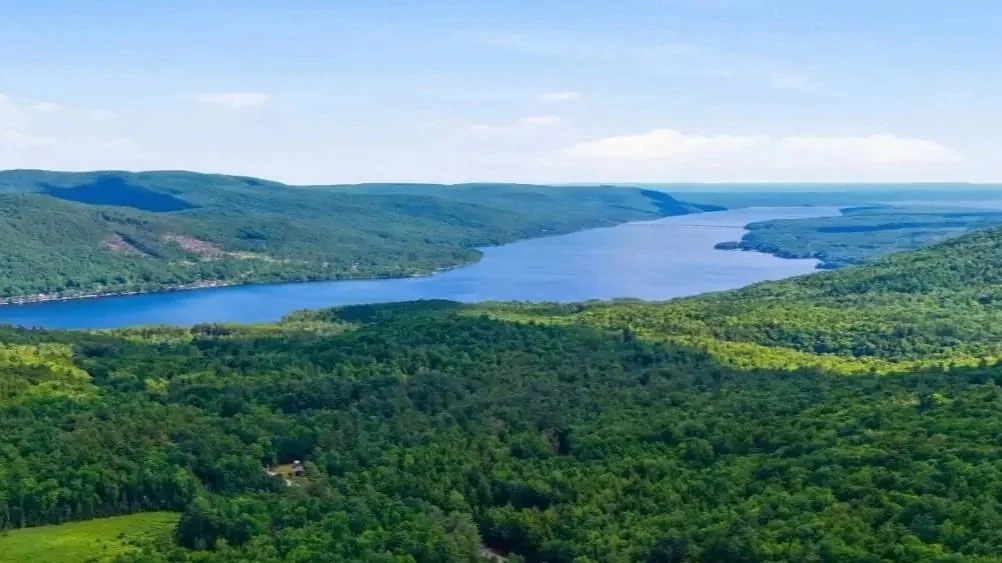
Before you buy land for a custom home, confirm the lot can legally and physically support the house you want — zoning and setbacks, a perc test for septic, well feasibility, usable road access, and any wetland, shoreline, or ledge rock issues that could add cost. Because most of our service area sits inside the Adirondack Park's "Blue Line," you'll also want to check whether the Adirondack Park Agency (APA) has jurisdiction over the parcel before you build, not after. In the southern Adirondacks and around Great Sacandaga Lake, the lots that look the most beautiful on a drive-by are often the ones that need the most homework, so get a surveyor and a builder involved before you sign anything.
Table of Contents
Start With Zoning and Setbacks
Check Access — Road Frontage and Right-of-Way
Get a Perc Test Before You Fall in Love with the Lot
Well Water: What's Actually Feasible
Topography, Ledge Rock, and Clearing Costs
Utilities and Broadband
Flood Zones, Wetlands, and Shoreline Setbacks
Deed Restrictions, Easements, and Right-of-Ways
Talk to a Builder Before You Buy, Not After
FAQ
Start With Zoning and Setbacks
Every town has its own zoning code, and it dictates more than most buyers expect — minimum lot size, how far your house has to sit from the property lines, maximum height, and sometimes even the footprint of outbuildings like a garage or barn. In Edinburg and the surrounding towns we build in, setback rules also shift depending on whether the parcel borders water, wetlands, or a town road versus a state highway.
Before you make an offer, call the town's building code enforcement office and ask directly: what's the zoning designation on this parcel, what are the setbacks, and are there any overlay districts (shoreline, floodplain, agricultural) that apply. It's a five-minute phone call that can save you from buying a lot that can't fit the home you're picturing.
You can pull a lot of this groundwork yourself. If the parcel is in Saratoga County, Saratoga County's Property Record Online System lets you look up the tax map, acreage, and assessment history for any parcel for free. It won't show you zoning districts directly, but it's a fast way to confirm you're looking at the right parcel and pull the tax map number before you call the town. (If your lot is in a different county — Fulton, Hamilton, or Warren, for example — look for that county's equivalent property record site.)
If the land falls inside the Adirondack Park's "Blue Line," you have a second layer to check: the Adirondack Park Agency. The APA classifies land under the Adirondack Park Land Use and Development Plan into one of several land use categories, and that classification — not just the town's zoning — can govern lot size, shoreline building setbacks, and whether a state permit is required in addition to your local one. An APA permit is commonly triggered by things like new construction on shoreline parcels, land within a set distance of a state highway, subdivisions, or structures over 40 feet tall. Many projects only need a local permit, but the only way to know for sure is to ask the APA directly for a jurisdictional inquiry before you close — it's free, and it's the fastest way to find out whether your lot needs anything beyond a town permit.
Check Access — Road Frontage and Right-of-Way
A lot without legal, deeded road frontage is a lot you may not be able to get a building permit for, no matter how good the price looks. If access comes through a shared driveway or a right-of-way across a neighbor's property, get that agreement in writing and reviewed before closing — verbal understandings between the current owner and a neighbor don't transfer with the deed.
Seasonal roads are common up here, and a road that's fine in July can be a different story in March. If a lot is only accessible by a private or seasonal road, ask who maintains it, whether that maintenance is guaranteed year-round, and whether your lender will even finance a home without confirmed year-round access.
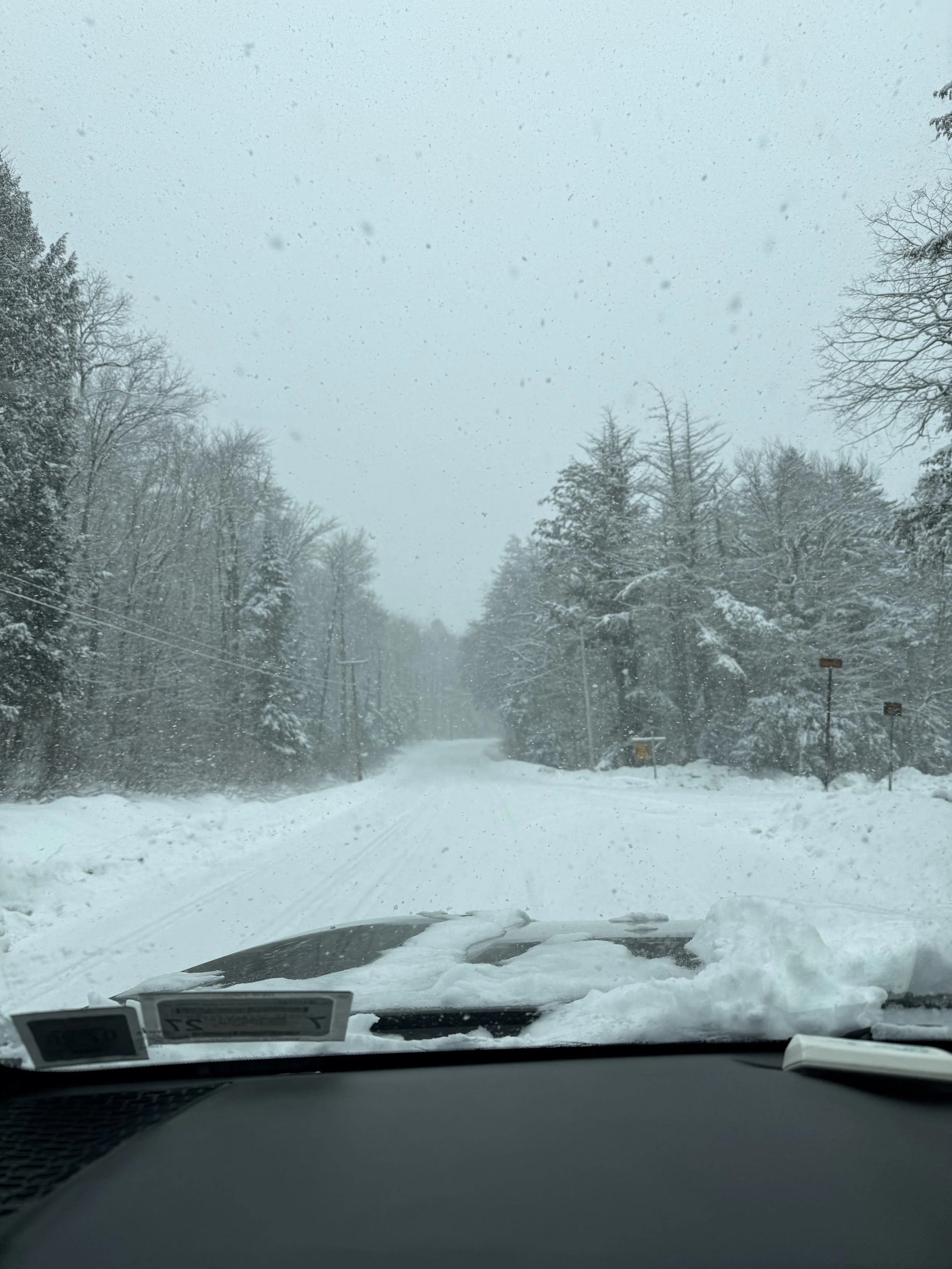
A road in Benson, NY, buried in snow after a winter storm — the kind of access that looks straightforward in July and very different in February.
Get a Perc Test Before You Fall in Love with the Lot
If the property isn't on municipal sewer — and most of what we build on is not — a percolation (perc) test and soil evaluation are what determine whether the lot can support a septic system at all, and what size and type. Some soils here are heavy clay or sit over ledge, and either one can rule out a conventional septic system in favor of a more expensive engineered one.
Make a perc test a contingency in your purchase offer, not an afterthought. It typically has to be done by a licensed engineer or approved tester and reviewed by the county health department before it's valid for permitting.
Well Water: What's Actually Feasible
Most lots outside village limits will need a drilled well, and well yield varies a lot from parcel to parcel — sometimes between two neighboring lots. A weak well doesn't just mean low water pressure; it can affect financing, insurance, and resale down the line.
If the seller hasn't already had a well drilled and tested, ask whether a nearby well log is on file with the county or state, which can give you a rough sense of expected depth and yield before you commit to drilling your own.
Topography, Ledge Rock, and Clearing Costs
A wooded, sloped, or rocky lot can be gorgeous — and it can also mean a much bigger sitework budget than a flat, cleared parcel. Ledge rock sitting close to the surface is common in this region, and it doesn't always show up until excavation starts. We've seen foundation plans need a full redesign after ledge showed up at just a couple feet down, well after the buyer already owned the land.
Before you close, it's worth walking the lot with a builder or excavator, not just a realtor. A trained eye can flag steep grades, wet spots, and likely rock long before it becomes a change order.
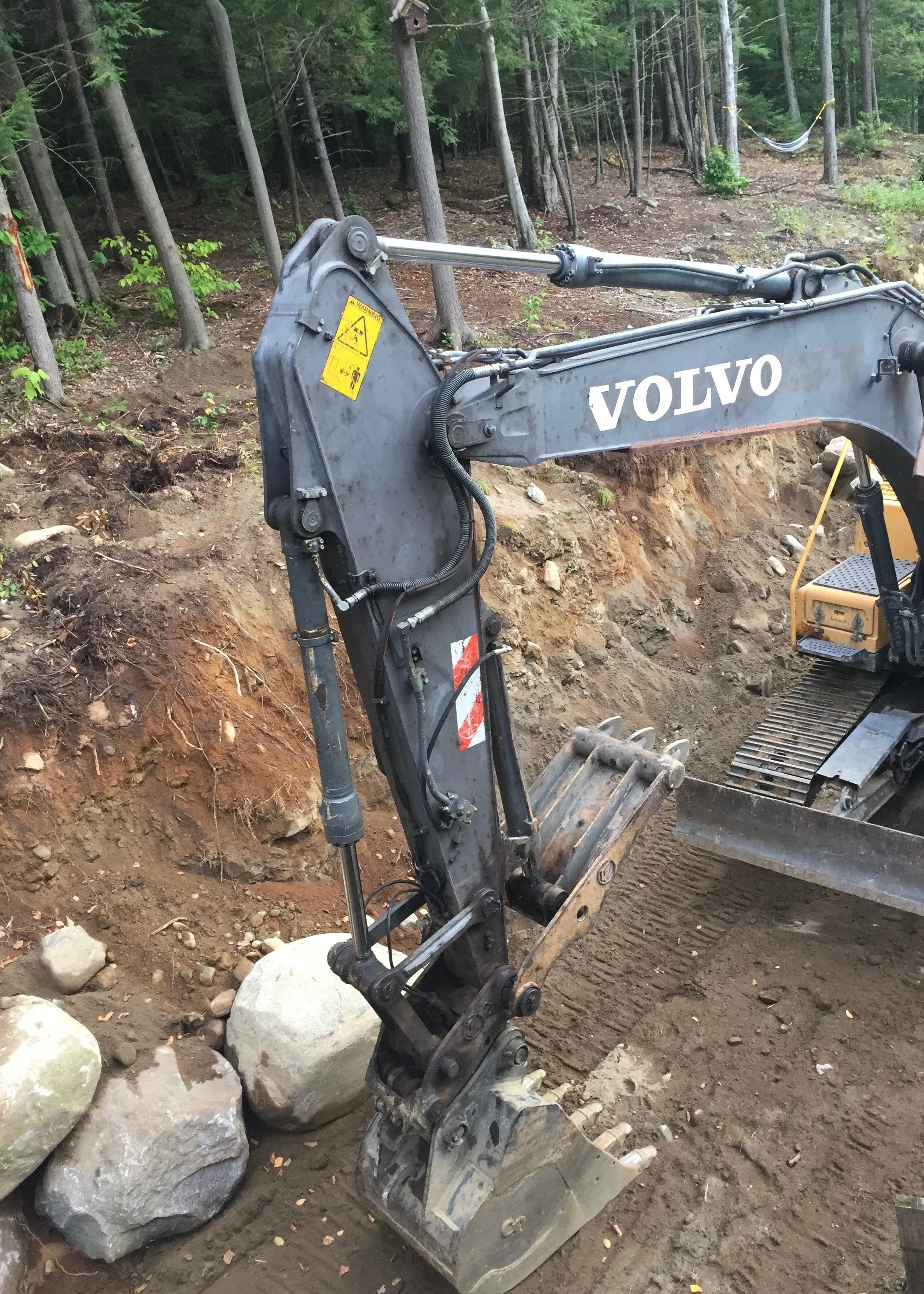
Rock and boulders like these are common once excavation starts on a sloped, wooded lot — even when nothing showed up on a surface walk. On this addition, we hit ledge rock partway through the dig, and it changed the design: we built in a step-up to work around the rock rather than blast or excavate deeper than made sense.
Utilities and Broadband
Confirm what's actually at the road versus what's advertised as "available." Electric service may require the utility to run a new line, propane is common in place of natural gas out here, and broadband or reliable cell service can be spotty depending on the parcel — worth checking directly with providers rather than assuming. If wired broadband isn't an option for a given lot, satellite internet through Starlink has been a solid workaround for a lot of our clients (and ourselves) in more remote spots — it's worth factoring into your decision instead of ruling out a lot over internet access alone.
Flood Zones, Wetlands, and Shoreline Setbacks
Anything near Great Sacandaga Lake or its tributaries deserves an extra look at FEMA flood maps and DEC wetland maps before you buy. Shoreline setbacks, wetland buffers, and floodplain building requirements (like elevated foundations) can meaningfully change both your design and your budget, and they're not always obvious from a site visit alone.
We've written more on this specific to the lake in our post on building a home near Great Sacandaga Lake — worth a read if you're looking at waterfront or near-waterfront lots.
Deed Restrictions, Easements, and Right-of-Ways
Pull the full deed history, not just the listing summary. Easements for utilities, neighboring right-of-ways, and older deed restrictions (sometimes decades old) can limit where and what you can build, even on land that's otherwise zoned for your plans. A title search and a conversation with a real estate attorney before closing is the cheap insurance here.
Talk to a Builder Before You Buy, Not After
The single biggest thing we'd tell anyone shopping for land: loop in a builder before you make an offer, not after you own it. A quick walk of the lot can surface site costs — clearing, driveway length, rock, drainage — that change the math on a parcel entirely. We're always glad to walk a lot with a prospective buyer, even before it's under contract.
FAQ
Do I need a perc test before I buy land, or can I do it after closing? Ideally before. Make it a contingency in your offer so you're not stuck with land that can't support a septic system.
How much does clearing and site prep typically add to a build in this area? It varies widely by lot — grade, tree cover, and rock all factor in. A pre-purchase walkthrough with a builder gives you a realistic range before you commit.
Is waterfront land near Great Sacandaga Lake harder to build on? Often, yes — shoreline setbacks, wetland buffers, and flood zone requirements add extra layers of review. See our Great Sacandaga Lake building guide for specifics.
Can Steel Pines help evaluate a lot before I buy it? We don't perform formal land assessments or surveys ourselves, but we're happy to walk a property with you and share what we see, and we can connect you with trusted local surveyors and engineers for the formal testing.
What's the most common surprise you see with land in this region? Ledge rock close to the surface and septic feasibility are the two that most often change a project's scope after purchase — both are things a perc test and a builder walkthrough can usually catch ahead of time.
About the Author
Darcie Burroughs is co-owner of Steel Pines, LLC, a custom home building and general contracting company based in Edinburg, NY, serving the southern Adirondacks and Great Sacandaga Lake region. Her husband Mark will work with clients from lot selection through move-in, with his hands-on experience across sitework, framing, and finish carpentry, Mark works directly with clients from lot selection through move-in.
Thinking About Buying Land?
Walk your lot with us before you sign. We'll give you a straight read on site conditions, likely costs, and whether the land fits the home you're picturing. Schedule a consultation with Steel Pines today.